Drivers & Pry Tools
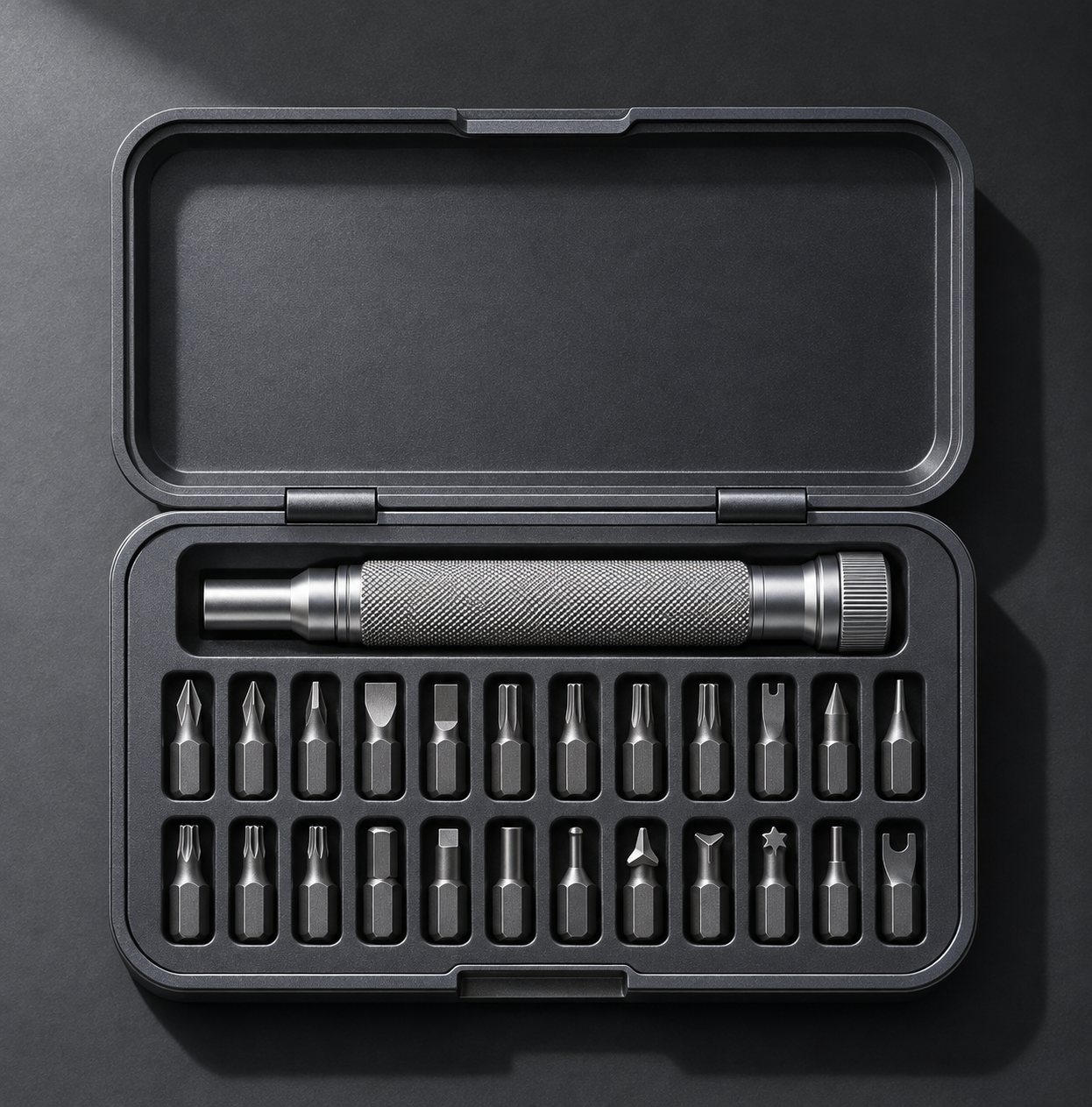
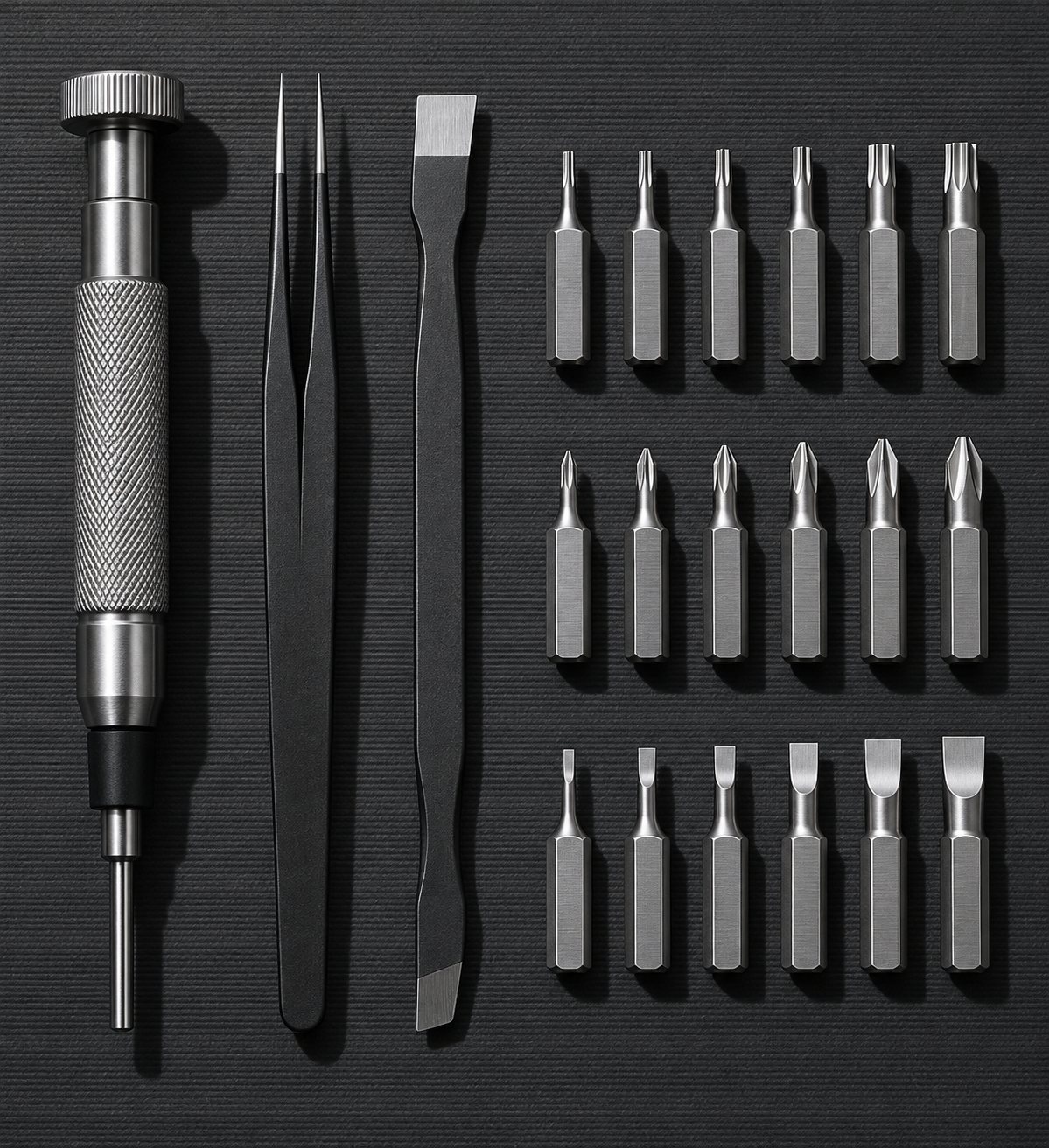
Precision Driver Set 32
32合1精密螺丝刀套装
- Hardness
- 58–60 HRC
- Bits
- 32 × S2
- In the case
- 186 g
$42.00$52.00
Hong Kong SAR · Trade counter since 2016
Hardness in HRC. Torque accuracy as a percentage of indicated value. Surface resistivity in ohms. Every line on this site is a spec sheet first and a product page second, because a technician buys a tolerance, not a colourway.
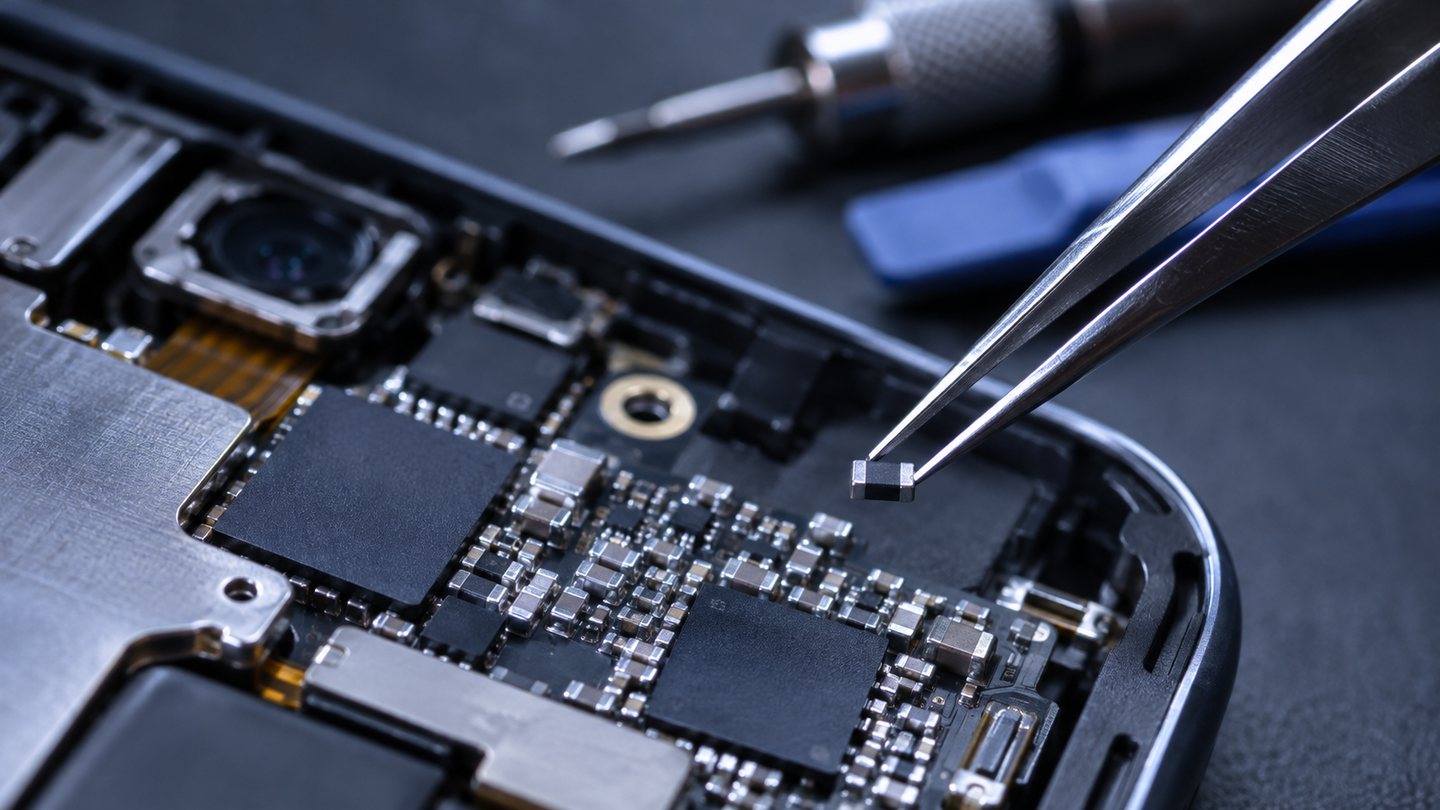
S2 bit sets, bearing-cap handles, non-marring pry bars.
2 SKUs View group → / 02Click wrenches with certificates, drive accessories.
1 SKU View group → / 03Temperature-controlled stations, T12 tips, stands.
1 SKU View group → / 04True-RMS meters, dissipative tweezers, bench kit.
2 SKUs View group →Stock list · 01–04
Drivers & Pry Tools
32合1精密螺丝刀套装
$42.00$52.00
Torque & Fastening
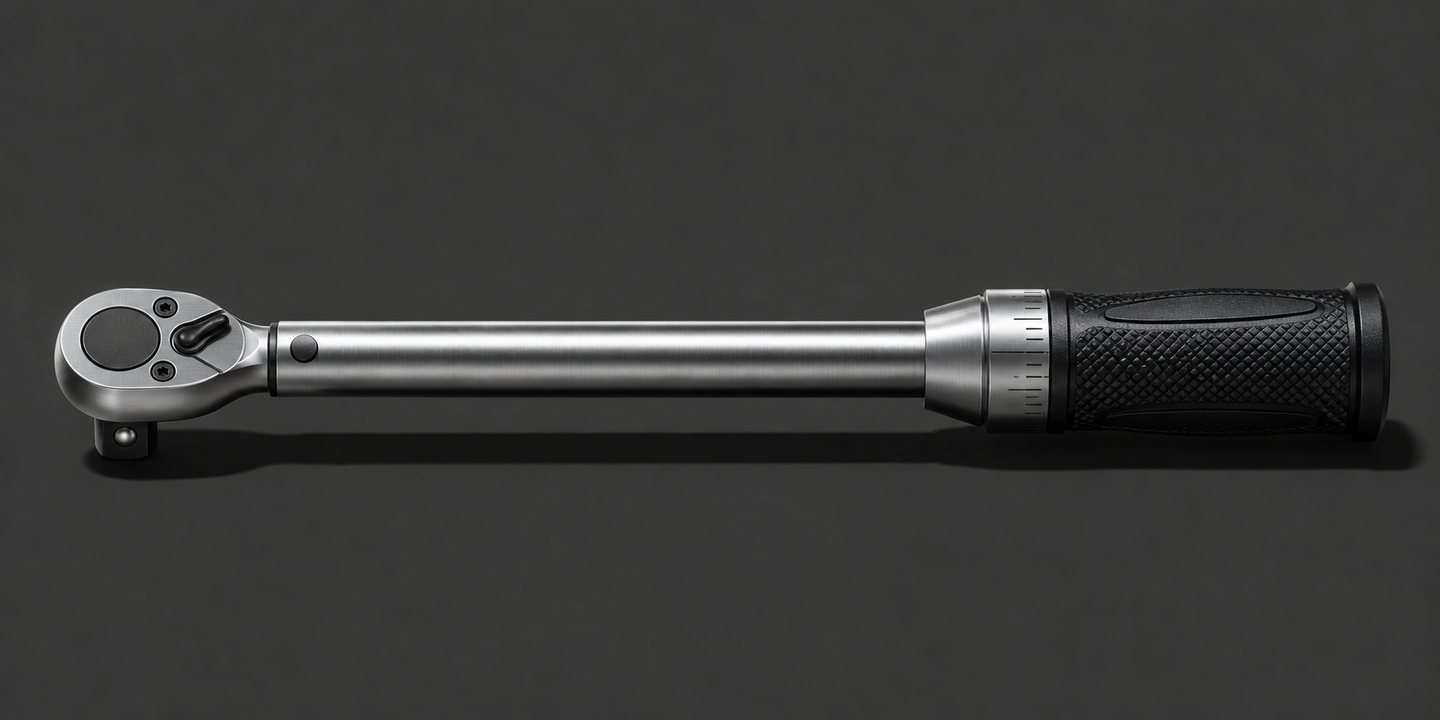
1/4英寸扭矩扳手
$88.00
Soldering & Thermal
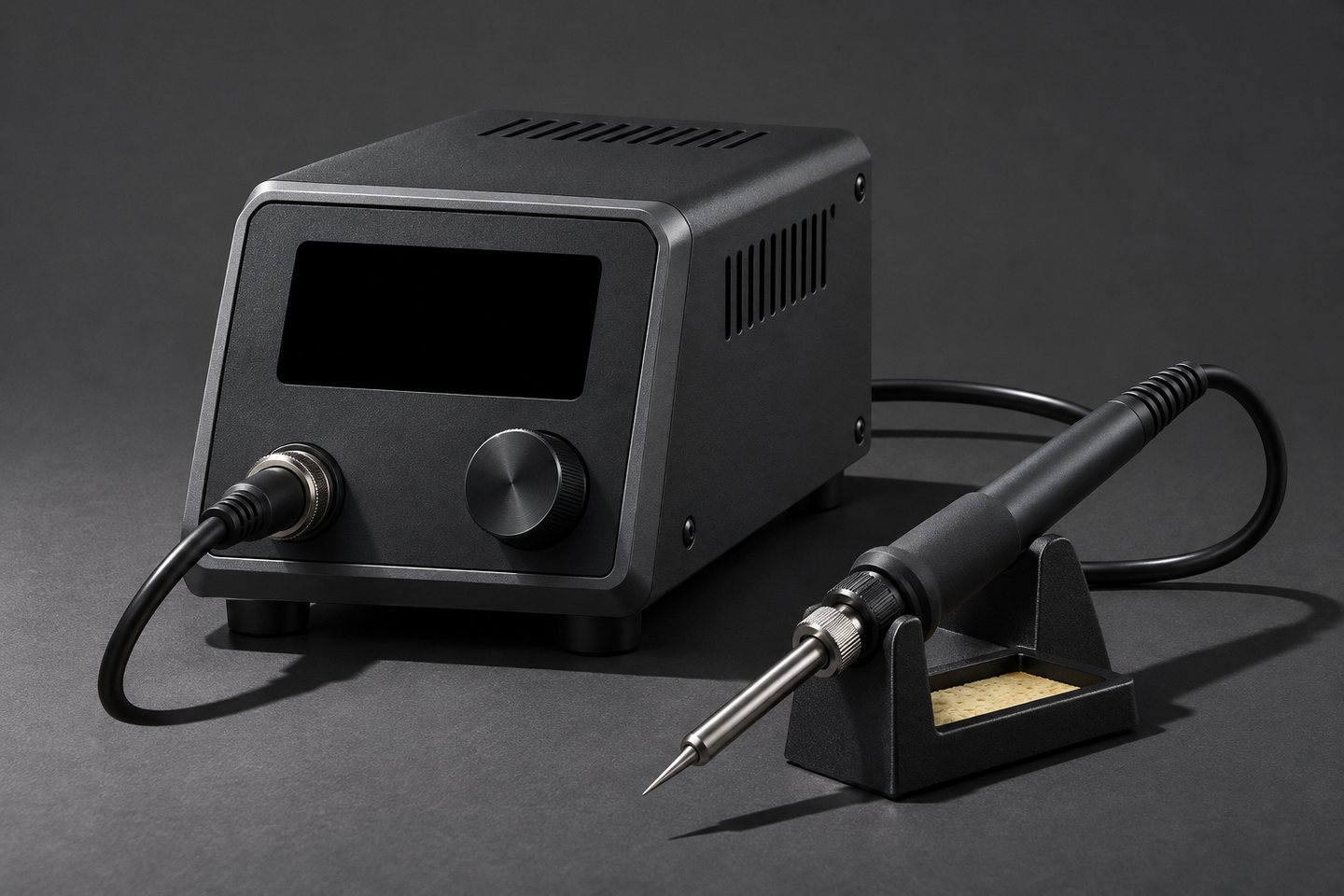
90W恒温焊台
$126.00$149.00
Measurement & ESD
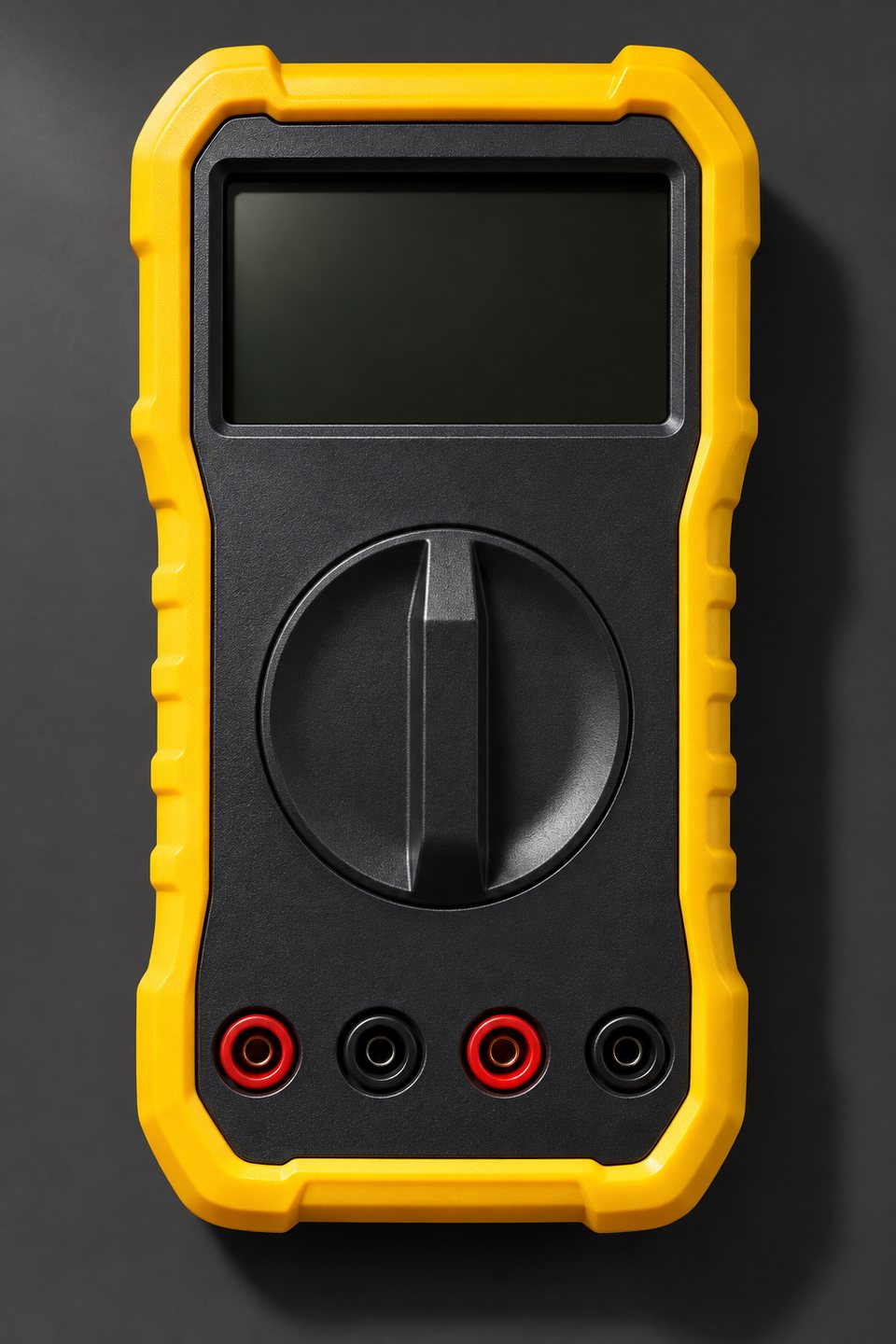
6000计数真有效值万用表
$74.00
One bit from every 2,000 is cut, mounted and tested on a Rockwell bench. If the lot reads under 58 HRC, the lot goes back.
Torque tools ship with a three-point certificate carrying the serial number, the readings and the lab reference. Not a batch sheet.
Tips, fuses, picks and sponges are listed as wear items on the datasheet, so nobody argues about warranty in month nine.
Six SKUs, held in depth at the Kowloon counter. Orders confirmed before 14:00 HKT leave the same working day.
Buying guide
Most tool failures are traceable to a number nobody printed on the packaging. These are the four we publish, and the four worth checking on anything you buy from anyone else.
S2 tool steel at 58–60 HRC holds a ground edge and flexes instead of shattering. Below 54 HRC the tip deforms; above 62 HRC it chips under a torque spike.
ISO 6789:2017 Type II Class A is ±4% of setting. Ours test to ±3%. Anything advertised without a class is a spring in a tube.
Dissipative means 10^6–10^9 Ω. Conductive below that discharges too fast; insulative above 10^12 does nothing at all.
A soldering tip is a wear item with a rated life, not a lifetime component. A supplier who says otherwise has not read their own datasheet.
On the bench
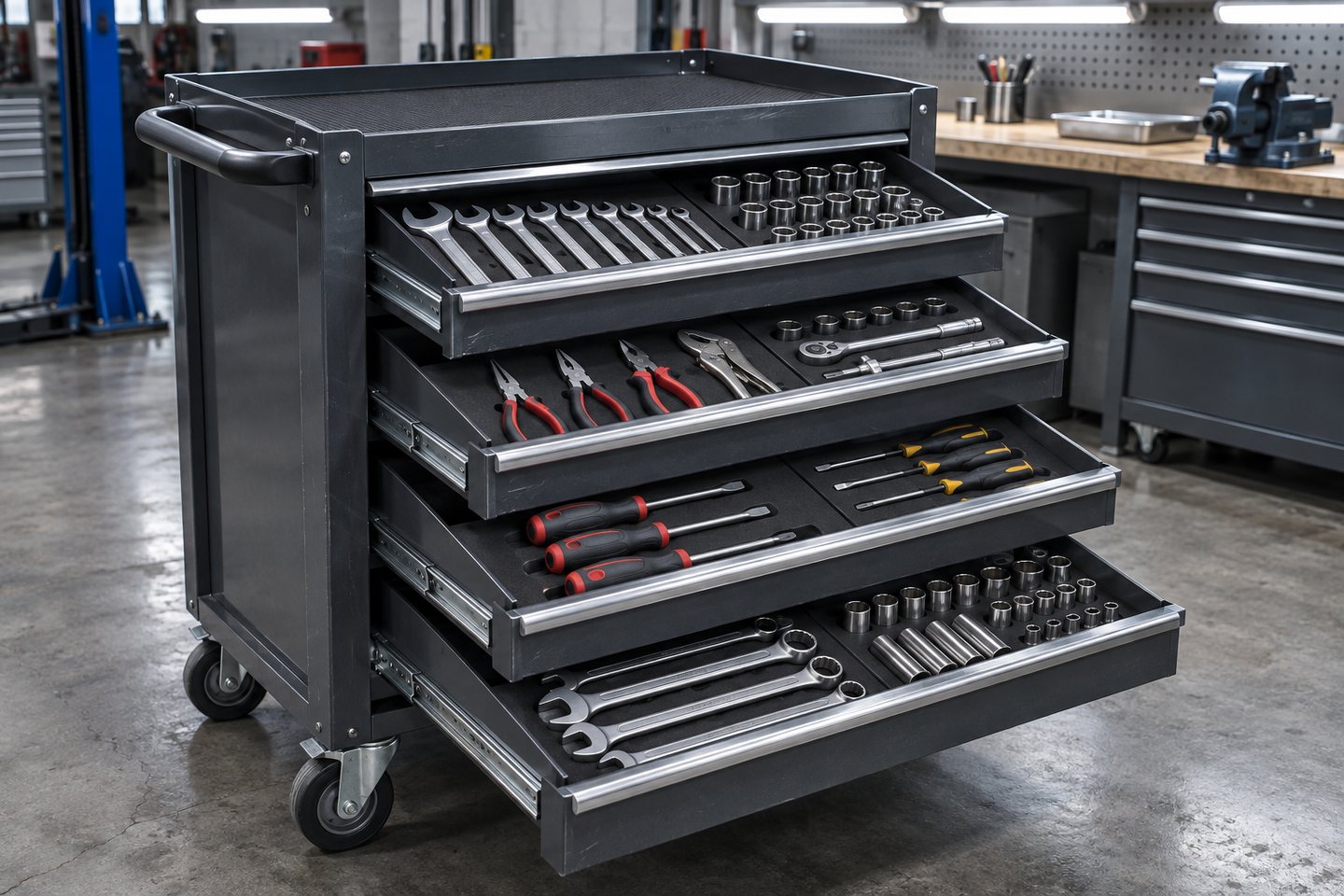
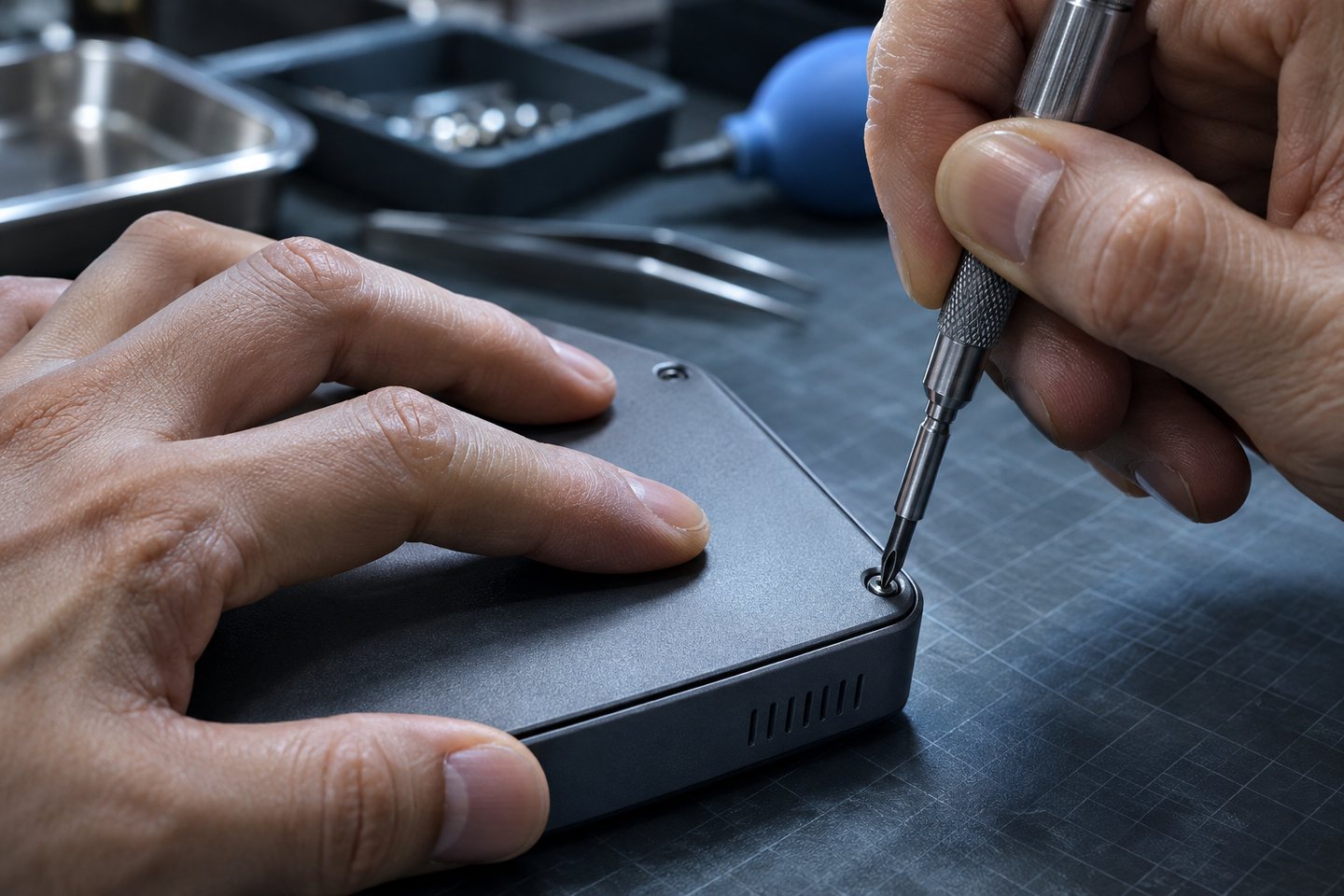
Photographed at a working repair counter in Sham Shui Po over four ordinary days — no studio set dressing.
From the counter
We ask for a specific measurement in every review we publish, because “great quality” is not a review.
★★★★★
“The bearing cap is the reason I stopped losing screws. I hold the cap with my index finger, spin the shaft with my thumb, and the bit stays seated at whatever angle the board is at.”
★★★★★
“Twelve Nm on an aluminium M6 is where a plain wrench costs you a thread. The click is audible through ear defenders and the certificate matched our reference gauge at all three points.”
★★★★★
“Set 350 °C, leave it. Recovery was under eight seconds on a 2 mm ground plane, which is the first station under two hundred dollars that has held that promise for me.”
Before you order
Answers written by the bench, not by a copywriter. If yours is not here, ask it on WhatsApp.
No. The LQ-PD-01 bits are 58–60 HRC, which is right for hand torque up to 0.35 Nm and wrong for an impact tool. Impact drivers deliver torque spikes that chip a hard, fine-ground tip. For impact work use a bit rated for it, usually 54–58 HRC with a torsion zone machined into the shank. Using these bits in a driver voids the 12-month breakage replacement.
Twelve months in normal workshop use, or every 5,000 cycles, whichever comes first. After a drop, recalibrate immediately — a 1 m drop onto concrete can shift a click mechanism by 4–6%. We recalibrate LQ-TW-02 free within the first 12 months and at cost afterwards, and we return the wrench with a fresh three-point certificate so your ISO records stay continuous. Always return the wrench to 5 Nm before storage; storing at the top of the range compresses the spring.
Almost always temperature, not the tip. Running at 420–480 °C oxidises the iron plating faster than flux can reduce it, and a tip left dry between joints has no solder reservoir to protect the face. Run 320–360 °C for leaded work and 350–380 °C for lead-free, leave a bead of solder on the tip before you park the iron, and use brass wool rather than a wet sponge. A T12 tip in this regime lasts roughly 20,000 joints.
It wears at the very tip, which is exactly where you need it, so we test for it. Expect 12–18 months of daily use before the coating thins at the jaw face; the set is specified at 18–25 µm and we recommend checking resistance annually with an ESD meter. Abrasive cleaning is the main cause of premature wear: IPA wipe only, no ultrasonic bath, no autoclave. If a pair reads above 10^10 Ω, replace it — a coated tweezer that has gone insulative is worse than bare steel because it looks safe.
Bench bulletin
Twelve letters a year covering new SKUs, revised spec sheets, tip-life data from our own bench and the occasional recall notice from a component supplier. No discount codes, no seasonal campaigns, one click to leave.